Showing posts with label Radiogram. Show all posts

Thursday, May 10, 2018

Kim and SWRadiogram at NASB 2018!

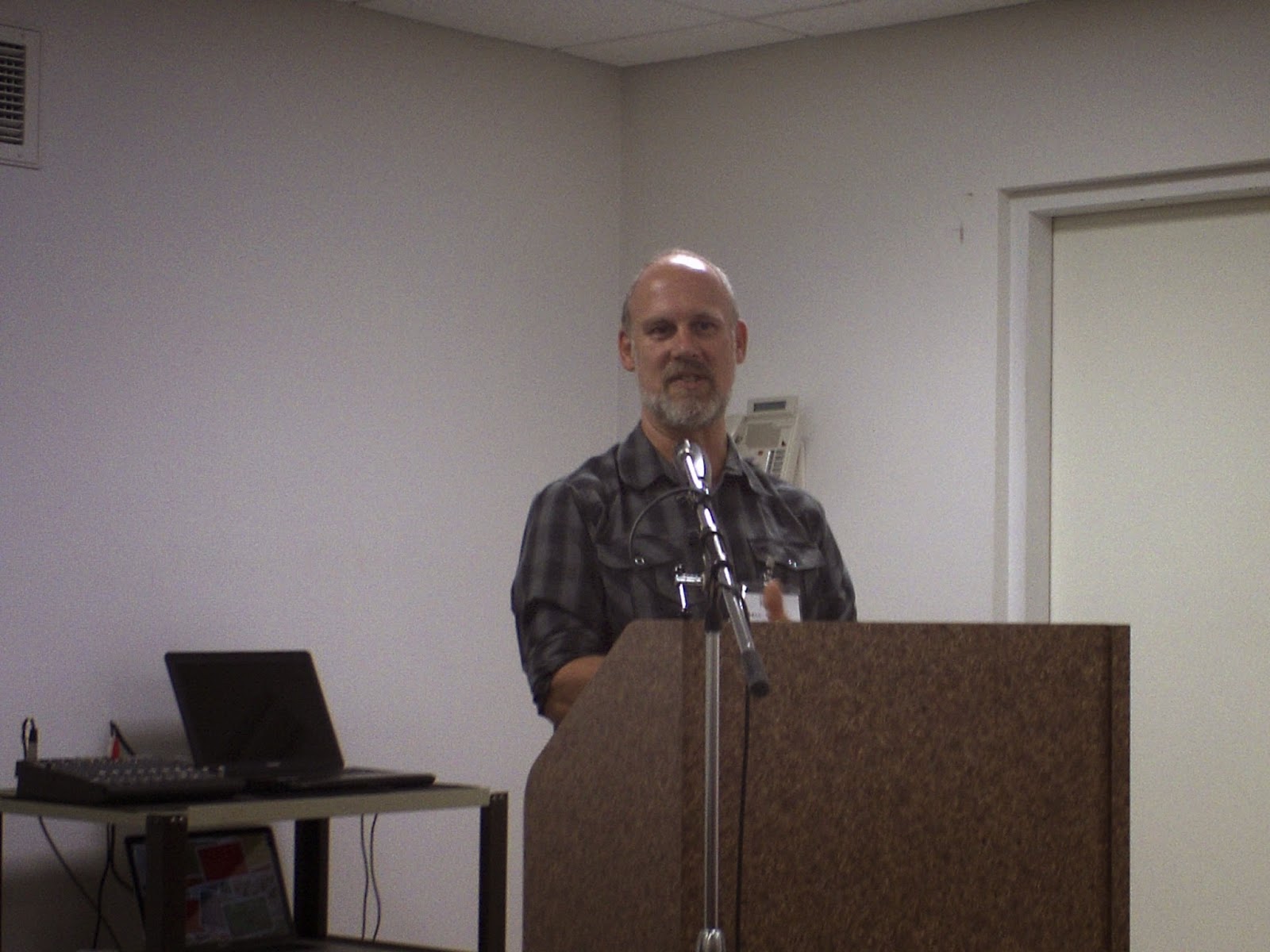
Received Today from Dr. Kim Andrew Elliott. I will be hanging out with him and the NASB crew this next week. He's got special treats planned - see below!


Hello friends,


This email will provide information on the broadcasts for the next two weekends (47 and 48)

A special broadcast of Program 48 will be a demonstration of Shortwave Radiogram for the meeting of the National Association of Shortwave Broadcasters (NASB), this year hosted by SonSet Solutions in Elkhart, Indiana. Reception of Shortwave Radiogram will be on a SonSet radio, an inexpensive receiver designed for use in developing countries. Using an antenna on the roof of the steel warehouse building, replete with electronic equipment in operation, the signal will somehow be fed to the SonSet radio, and the modes will be decoded from what is received. What could possibly go wrong?

If for some reason an adequate signal does not reach the SonSet radio, Plan B will be to use audio on an mp3 recorded from program 47, using an SDR somewhere. For this reason, programs 47 and 48 have similar formats, but the content is different. Both shows will include slow modes, suitable for poor reception, such as on low-cost radios inside a steel building. And there will be some text in non-Latin alphabets.

For logistics reasons, the first transmission of program 48 will be moved up to 0800 UTC on 14 May.  To compensate for program 47 being bumped from the 0800 slot, program 47 will be broadcast at 0800 on  21 May. See this schedule chart ...


Program
No.
Day
May
date
UTC time
Frequency
kHz
Transmitter
47
Friday
11
2030-2100
7780
9455
WRMI Florida
47
Saturday
12
1600-1630
9400
Space Line Bulgaria
47
Sunday
13
2330-2400
7780
WRMI Florida
48
Monday
14
0800-0830
5850
7730
WRMI Florida
48
Wednesday
16
2100-2130
9395*
WRMI Florida
48
Thursday
17
2030-2100
9395*
WRMI Florida
48
Friday
18
2030-2100
7780
9455
WRMI Florida
48
Saturday
19
1600-1630
9400
Space Line Bulgaria
48
Sunday
20
2330-2400
7780
WRMI Florida
47
Monday
21
0800-0830
5850
7730
WRMI Florida
 
*Special for the National Association of Shortwave Broadcasters meeting in Elkhart, Indiana, 17 May at 2030 UTC. The transmission on 16 May at 2100 UTC is to test the receiving and decoding equipment and software. Listeners everywhere are invited to tune in to one or both of these transmissions.

Here is the lineup for Shortwave Radiogram, program 47, 11-13 and 21 May 2018, in modes as noted:

 1:34  MFSK32: Program preview
 3:09  Olivia 64-2000: Supervolcanoes have advance warnings
 7:10  Olivia 32-2000**: Continued
10:15  MFSK16: Text samples of Russian, Chinese, and Persian***
17:03  MFSK32: Australia invests in space agency*
21:30  MFSK64: President Macron visits New Caledonia*
26:23  Image: Railroad on 10th Street in New York City, 1910*
27:56  MFSK32: Closing announcements


Here is the lineup for Shortwave Radiogram, program 48, 14-20 May 2018, in modes as noted:

 1:33  MFSK32: Program preview
 3:11  Olivia 64-2000: Mercury has thin but dense crust
 6:49  Olivia 32-2000**: Continued
 9:37  MFSK16: Text samples of Russian, Chinese, and Persian***
16:42  MFSK32: New solar still purified water*
20:29  MFSK64: South Georgia declared rodent-free*
25:13  Greetings to the NASB meeting*
27:43  MFSK32: Closing announcements

* with image

** Use Olivia Custom setting: 32 tones, 2000 Hz bandwidth

*** Use UTF-8 character set (default in TIVAR and newer versions
of Fldigi)

Please send reception reports to radiogram@verizon.net

And visit http://swradiogram.net

Twitter: @SWRadiogram or https://twitter.com/swradiogram (check frequently during weekends)

Wednesday, September 16, 2015

Developers...Start your engines!

Not DRM but an incredible opportunity to make a difference using International Shortwave!
Here is the BBG RFP to develop end-user mobile software to decode and display VOA Radiogram.
VOA Radiogram (presented by Dr. Kim Andrew Elliott) has more than proven itself as a way to get text and images into all corners of the globe, using conventional AM shortwave transmitters.

Now it is your turn to develop mobile software, to see VOA Radiogram received on typical, off the shelf mobile devices like smartphones and tablets. See the RFP here and recognize the short turn-around time to apply. Let's see a DRMNAer "go for the gold" and earn the monetary prize behind this awesome initiative! Hurry, there is no time to lose.

Sunday, May 24, 2015

DRM developments at NASB 2015 in Washington DC


I have just returned from an excellent two days at NASB 2015 in Washington DC, hosted by RFA with on-site host Al "A.J." Janitschek

I was pleasantly surprised by the volume of DRM30 discussion this year. North American shortwave broadcasters are ready for DRM!


It was the 25th annual meeting of the NASB so Continental helped us celebrate with cake!

Specifically, there were three talks that featured DRM prominently. Below are just a few of the overall conference highlights:

Lauren Libby, President of TWR gave an impassioned plea for DRM receivers and for us to look to DRM for the future of international shortwave broadcasting. TWR trialed a DRM feature to Japan on KTWR Guam where they received a positive response from Japanese enthusiasts. 

On Friday, Cal Carter of Continental Electronics presented updates from the DRM consortium including the current status of the large scale Indian initiative as well as positive momentum in the Asia-Pacific region, Brazil and Southern Africa.


Of course, I took a crack at sharing the excitement by presenting my experience as a listener and logger. I enjoyed showing examples and playing audio from the user's perspective. I explained and demonstrated the strengths of DRM using Terje's DRM-Log Plotter software. My slides here and the audio clip here. I presented a reception time-capsule video at NASB 2014 which you can view here. Thanks to Terje for the great DRM-Log Plotter handout.

Here is a music sample from RNZI, recorded via DRM at my home in Oregon. That is about 7000 miles from their 25kW transmitter and received on my Newstar DR111 using an alligator clip-lead to a basement drain pipe as an antenna. Isn't DRM amazing?

We were very fortunate to have Jerome Hirigoyen in attendance from TDF. Their site in Issoudun, France currently has 2 high-power DRM transmitters in operation.
Dr. Kim Andrew Elliott presented VOA Radiogram and encouraged broadcasters to participate in the Radiogram initiative. VOA Radiogram is a weekly program whereby textual news with images can be transmitted on traditional, unmodified shortwave transmitters and likewise received using off-the-shelf, unmodified shortwave radios.

Gerhard Straub from IBB gave a worldwide update about their broadcast sites. Gerhard also indicated there will be an RFP out soon to develop an end-user app for decoding VOA Radiogram on smartphones and tablets. More info to follow on this exciting development!


During the NASB business meeting, the conversation got very interesting. A significant number of the broadcaster members showed interest in using DRM (sooner rather than later) and working together to make affordable receivers (USD 50 or under) available. This conversation was augmented by audience members including Ludo Maes from Broadcast Belgium and his extensive DRM knowledge. I was really excited to finally get to meet him, having enjoyed years of his work with TDP Radio and The Disco Palace on DRM.
I'm sure that attendees will agree, this was an enjoyable and informative gathering. For me the opportunity to "talk shop" with shortwave broadcasters and enthusiasts is unsurpassed. To those I met for the first time and for those I have known, it was my great pleasure to be in attendance.
As I flew home, I snapped this gorgeous view of Mt. Hood near Portland, Oregon. It was a perfect way to sum up my trip - "the sky is the limit" for DRM in North America. I would like to thank the NASB, RFA and all those in attendance for making this such a great conference. Special thanks go to Dr. Elliott for serving as my local host. It made my trip even better!

Sunday, November 30, 2014

Non DRM digital fun

STF Radio has hit the air with a bold experiment. Carried by WRMI lastnight, several hours of digitalmodes, waterfall painting, ASCII art and music. Check out this reception from a digital fan in Europe.

Not DRM but fun for the digital enthusiast. I can't help but think that Dr. Elliott's experiments with VOA Radiogram paved the way for these gents! Fldigi is the recommended decoder.

Sunday, May 18, 2014

NASB 2014 recap for the digital enthusiast


Here is a brief recap of the NASB 2014 conference from the point of a DRM enthusiast.

On the first morning, standing in front of me in line for the van was a founding DRMNA member - Zyg from Georgia. It was so great to meet him in-person for the first time, having corresponded for nearly 10 years over DRMRX and DRMNA!  We had a fine time chatting throughout the conference.
After a 15 minute ride, we began to see what we came for -  the VOA antenna field...a sight/site to behold! It reminded me of seeing VOA Delano and KGEI in Redwood City, in my youth.
Turning from the highway onto the site, the situation became plain - this is an amazing antenna field. We continued past curtain after curtain of TCI antennas.


We then arrived at the Edward R. Murrow Transmitting Station. The building alone has that great cold-war look and with old glory flying high in the brisk North Carolina breeze.


We were dropped off at the steps and made our way into the facility. The building maintenance was impeccable and the staff were welcoming and charming. They offered us coffee and ushered us up to the conference room. After a brief introduction by VOA host Rick Williford and NASB president Brady Murray, came some words from Secretary Jeff White. We then headed back down and split into groups to tour the transitter plant and an antenna field that was not “hot” with an active broadcast. 
Macon Dail, Chief Engineer at the facility was our guide, and an excellent one at that. He is very knowledgeable and his willingness to take questions of all kinds, made everyone feel comfortable.
Standing under the immense antennas was a dream come true for me, and something I never thought would happen. 


As you might imagine, the "radio geek" in us all was obvious. Mark Allen of Rohn Towers and I couldn't get enough of the TCI curtains!


After several stops and standing under a variety of the antenna types in the field, we returned to the building to switch  to our tour of the transmitter facility. Macon walked us down the hall with the “authorized personnel only” sign and into the inner-sanctum of the station past walls of GE, Continental and various other transmitters. Macon noted several that were currently on-air. Unfortunately with the current governmental budget constraints, broadcast hours at the station have been significantly reduced. At the time, several programs for Cuba were on-air.  

We went into the central room were the master controls for the transmitters and antennas are monitored. It is a really neat place, reminiscent of the bridge of the Starship Enterprise!

Afterwards, we settled back into the conference room for our sessions. There was a great variety of topics, but I will only highlight the DRM and digital related sessions (of course this means I'm leaving out many excellent talks that didn't relate strictly to digital or DRM).

First up was Dr. Kim Andrew Elliott with an update on his work with VOA Radiogram. You might recall that yours truly is a proponent of this novel technique and has written several articles and opinions to that regard. He demonstrated the format live, including text and images. 


VOA has now transmitted the program for over a year with 100 or more listener responses weekly, from all corners of the globe. What remains remarkable is the quality of reception (chiefly using the MFSK32 mode) both inside and outside the intended target areas. Clearly, this service extends the reach of the existing transmitters, and does so without modifications or specialized receivers.

We also heard from a newer (lets call it "resurrected") station on shortwave - KVOH in California. In attendance were Rev. John Tayloe and Ray Robinson. They are interested in expanding their broadcasts with DRM in the future. Once again, their concern is the availability of receivers.


KTWR in Guam sent the very capable George Ross to talk about their exciting experiments with DRM. George had comments about what great success they are seeing in broadcasting DRM to Japan. Their listener response from there has been amazing. I really like what they are doing - transmitting quality music in stereo, to show off what DRM can do! 


Calvin Carter of Continental Electronics delivered the latest word from the DRM Consortium. DRM is beginning to make great strides in areas of Asia. Calvin had a slideshow, pointing out recent highlights - particularly regarding plans for India and information about new Indian made receivers, that should be available soon. These are in response to the AIR DRM receiver tender.


I presented the history of this blog, the DRMNA Yahoo Group and my experiences with DRM over the last ten years. I have you all to thank for our success. I was flattered and proud to be able to present about such an excellent group of enthusiasts.


[Christopher, George and Calvin - the "Three Musketeers of DRM" at NASB 2014]

There were a few things that would have made the conference perfect - well a few people perhaps... Particularly conspicuous by their absence were Brendan and Benn, to name a few. We missed you guys!

Overall, there were only a handful of us “strictly enthusiasts” in attendance. NASB would really like to have more of us in the future, and I can tell you that what we think and say does make a difference to them.

I believe that the listeners/hobbyists in attendance had as good of a time as the broadcasters themselves. Most of us ended the conference by going up to the transmitter site lookout tower, perched on top of the building. It gave us a 360 degree “birdseye view" of the entire property. What an amazing way to end our day! We all popped out the jalousie style windows and hung out the cameras, snapping pictures like madmen!

Above all, we got to see what great people are involved in the domestic shortwave industry. The VOA/IBB/BBG crew that hosted us were top-notch and I now understand the term “Southern Hospitality”. I was struck by their love and enthusiasm for the work they do. I offer my thanks to the NASB for this excellent conference!

and special thanks to Zyg for some of the photos above. I couldn't have told the story without you, buddy! 73


Thursday, May 16, 2013

Radio Australia joins the Radiogram Fun!

From the VOA Radiogram site of Dr. Kim Andrew Elliott

For the first time, Radio Australia will broadcast digital text and images. This will be Saturday 18 May and Sunday 19 May 2013.


UTC               Frequency (kHz)   Target

0830-0835      7410 & 11945        south-west Pacific
1230-1235      9580 & 12095        south Pacific

As is characteristic of shortwave, reception outside the nominal target areas is likely.
Each five-minute broadcast will include:

  :34 RA tuning signal (still Waltzing Matilda?)
  :05 Tone 1500 Hz
1:42 MFSK16 text
1:42 MFSK32 text
  :55 MFSK32 image

All modes are centered on 1500 Hz. The Radio Australia digital transmissions can be received on any shortwave, even if it does not have single sideband capability. Patch audio from the radio to a personal computer, and use software to decode the modes. For more information, see how to decode the modes.

Thursday, March 14, 2013

“Soft launch” of VOA Radiogram this weekend

Here is the link to VOA Radiogram information for this weekend.

I've copied the text from the announcement here for your convenience:


"VOA Radiogram will “soft launch” this weekend. Here is the transmission schedule (all days and times are UTC):


Saturday 1600-1630 17860 kHz

Sunday 0230-0300 5745 kHz (Saturday evening in North America)

Sunday 1300-1330 6095 kHz

Sunday 1930-2000 15670 kHz


All via the IBB Edward R Murrow Transmitting Station in North Carolina.

The digital text modes to be transmitted this weekend on VOA Radiogram are as follows. Each text transmission will be one minute, unless otherwise specified. Asterisk * denotes RSID: if your RxID is on, Fldigi will automatically switch to this mode and audio frequency.