Showing posts with label RNZI. Show all posts

Sunday, August 23, 2015

Even more DRM from RNZI for HFCC

Here is the complete list of additional RNZI DRM broadcasts from the 24th to the 28th of August for HFCC in Brisbane, Australia:

02:00 - 02:55 17675 kHz Pacific
04:00 - 04:58 17675 kHz Pacific
04:59 - 06:50 13730 kHz Pacific
07:59 - 10:58 9890 kHz Pacific
10:59 - 12:58 9890 kHz NW Pacific, PNG
21:51 - 23:55 17675 kHz Pacific

This should offer some great reception opportunities for DRMNAers.

Monday, June 22, 2015

Solarstorm hits during RNZI reception

Here is an intriguing graph from DRM Log-Plotter while I was listening to RNZI on 17675kHz tonight. You can see that "Old Mister Sun" took out a good chunk for the program, with the SNR plummeting to zero at one point. The program resumed eventually at typical SNR levels.

Ironically, New Zealand's national aircraft radar was also effected at the same time, grounding all NZ flights! Coincidence?

Friday, June 5, 2015

RNZI - DRM vs AM audio bandwidth

I've done this comparison before but here is a quick double-snapshot of RNZI in DRM and in AM.

This was done with the "Music 101" program host Emma Smith IDing the show, first in DRM on 17675 kHz and then in AM on 15720 kHz. You can see that DRM gains you 5 kHz of audio bandwidth. At the audio bitrate of 15.5 kbps using AAC+, RNZI sounds great - especially when you consider that it is reaching me from nearly 7000 miles away.


No argument, RNZI in AM does perfectly well here, but it is clear that DRM delivers the goods. Also note the level of audio compression on the AM signal. In spreading out the DRM signal, we also gain delightful dynamic range, which is what the recent CD loudness wars have been all about. Imagine how much better xHE-AAC would be!

Sunday, May 24, 2015

DRM developments at NASB 2015 in Washington DC


I have just returned from an excellent two days at NASB 2015 in Washington DC, hosted by RFA with on-site host Al "A.J." Janitschek

I was pleasantly surprised by the volume of DRM30 discussion this year. North American shortwave broadcasters are ready for DRM!


It was the 25th annual meeting of the NASB so Continental helped us celebrate with cake!

Specifically, there were three talks that featured DRM prominently. Below are just a few of the overall conference highlights:

Lauren Libby, President of TWR gave an impassioned plea for DRM receivers and for us to look to DRM for the future of international shortwave broadcasting. TWR trialed a DRM feature to Japan on KTWR Guam where they received a positive response from Japanese enthusiasts. 

On Friday, Cal Carter of Continental Electronics presented updates from the DRM consortium including the current status of the large scale Indian initiative as well as positive momentum in the Asia-Pacific region, Brazil and Southern Africa.


Of course, I took a crack at sharing the excitement by presenting my experience as a listener and logger. I enjoyed showing examples and playing audio from the user's perspective. I explained and demonstrated the strengths of DRM using Terje's DRM-Log Plotter software. My slides here and the audio clip here. I presented a reception time-capsule video at NASB 2014 which you can view here. Thanks to Terje for the great DRM-Log Plotter handout.

Here is a music sample from RNZI, recorded via DRM at my home in Oregon. That is about 7000 miles from their 25kW transmitter and received on my Newstar DR111 using an alligator clip-lead to a basement drain pipe as an antenna. Isn't DRM amazing?

We were very fortunate to have Jerome Hirigoyen in attendance from TDF. Their site in Issoudun, France currently has 2 high-power DRM transmitters in operation.
Dr. Kim Andrew Elliott presented VOA Radiogram and encouraged broadcasters to participate in the Radiogram initiative. VOA Radiogram is a weekly program whereby textual news with images can be transmitted on traditional, unmodified shortwave transmitters and likewise received using off-the-shelf, unmodified shortwave radios.

Gerhard Straub from IBB gave a worldwide update about their broadcast sites. Gerhard also indicated there will be an RFP out soon to develop an end-user app for decoding VOA Radiogram on smartphones and tablets. More info to follow on this exciting development!


During the NASB business meeting, the conversation got very interesting. A significant number of the broadcaster members showed interest in using DRM (sooner rather than later) and working together to make affordable receivers (USD 50 or under) available. This conversation was augmented by audience members including Ludo Maes from Broadcast Belgium and his extensive DRM knowledge. I was really excited to finally get to meet him, having enjoyed years of his work with TDP Radio and The Disco Palace on DRM.
I'm sure that attendees will agree, this was an enjoyable and informative gathering. For me the opportunity to "talk shop" with shortwave broadcasters and enthusiasts is unsurpassed. To those I met for the first time and for those I have known, it was my great pleasure to be in attendance.
As I flew home, I snapped this gorgeous view of Mt. Hood near Portland, Oregon. It was a perfect way to sum up my trip - "the sky is the limit" for DRM in North America. I would like to thank the NASB, RFA and all those in attendance for making this such a great conference. Special thanks go to Dr. Elliott for serving as my local host. It made my trip even better!

Tuesday, May 27, 2014

RNZI does it right, no matter which mode!

Here is a quick experiment I performed last night. With truly amazing band conditions, I made 2 simultaneous recordings using my Pappradio on my 2.2GHz laptop using DReaM and HDSDR software.

I've synced them here into a stereo file where left channel is analogue on 11725kHz, right channel is DRM on 11690kHz. RNZI runs the equivalent of 15.5kb bitrate AAC+ in mono on DRM.


As you see from the diagram, the AM is more processed/compressed, but as you listen, it is immediately evident that their DRM settings match their AM fidelity precisely. My audio file is in WAV, so there is no additional compression or noise reduction being applied. RNZI is really an example of excellence in broadcasting. Hats off to the crew over there!

Wednesday, August 14, 2013

More great DRM30 news from India!

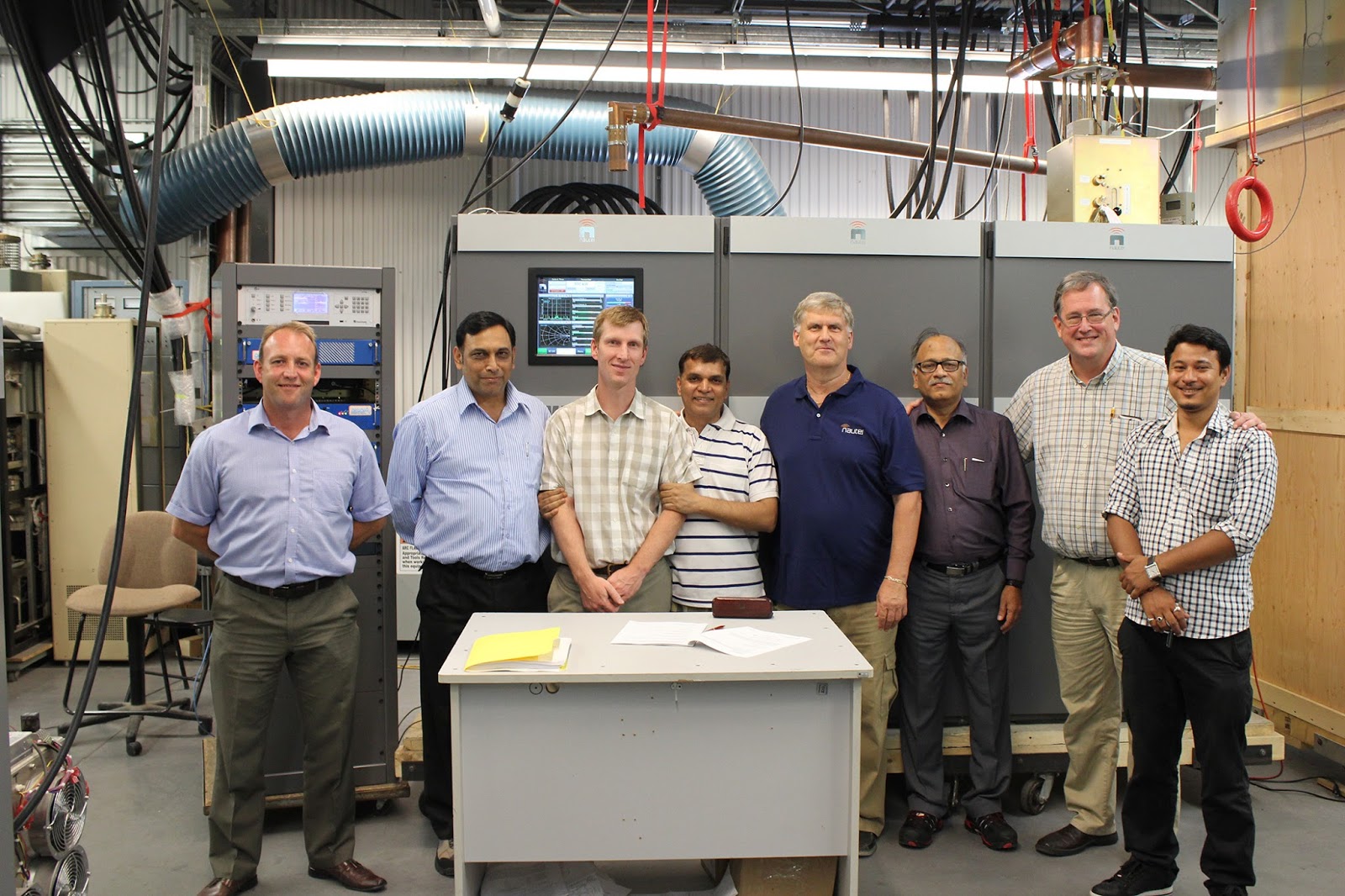
Read the story over at Radioworld about the big delivery Nautel just made to AIR. India is really doing DRM up right! I sure hope some cheap, reliable, convenient and energy conservative receivers are soon to follow! If only propagation was better - we might actually have some cool stuff to listen to via DRM30 on shortwave. I shouldn't complain since what we we do have nightly (RNZI) is awesome!

Tuesday, August 6, 2013

New and Improved VOACAP - Ideal for SWLs


Please give the newest iteration of VOACAP a try. This impressive tool is great for SWLs, Frequency Coordinators and even Hams (although the bands shown are SWBC only.)

I set this sample up for RNZI to me. Nice to see all the times and frequencies when the signal is expected to be good!

Sunday, April 21, 2013

Playback DRM recordings from the Newstar DR111 on your PC

The Newstar DR111 allows you to record DRM recordings on an SD card. It uses the Multiplex Distribution Interface (MDI) protocol. While I log reception (you can find out how to do that here) I also record the programs. This is particularly helpful overnight. For me this is nearly always RNZI. They have some great overnight music programs on the weekends. 

The Newstar DR111 allows you to replay these files on the receiver. This is nice, but the best part is that it allows you to archive the audio and convert it for other uses! Visit the CDNSE Newstar DR111 page for the how-to (choose the DR111 Blog tab) or look at this convenient PDF of the directions.

At the point you are setup to do this, you can go into DReaM's Evaluation Dialogue and "save audio as wav" if you want something to play on your portable audio player or mobile. It will make a WAV file which is quite large. It does so in real time as well. Perhaps someone will write a program to expedite this conversion and output in a format more conducive to mobiles.

Unrelated to this topic, but worth mentioning, I located a very nice Melchor Switching Regulator PSR-53-7. I am now running the Newstar DR111 from my always float-charged 12V back-up battery.
Voltage in to the regulator is about 14V and output is a cool 5.11V. I think this is overkill for my application, but it works well where other voltage regulators I have used have been problematic. I'll likely put a cigarette lighter plug on this one, for automobile use.


Wednesday, May 23, 2012

Another Newstar DR111 Review

Our longtime DRMNA colleague Brendan dives headfirst into the DR111:  

I received my DR111 on May 21st, via Kuala Lumpur, Malaysia - which is not the shortest route between Cheng Du and Arizona! The package had seen a lot of miles, but it was completely intact and that is what matters most. Arriving at home, I carefully unboxed it and found everything that was supposed to be there was indeed there. I immediately plugged it in, deciphered the controls (who needs a manual? ;) ), and quickly had REE on the air. Since then, I've been enjoying listening to all the DRM I can get here. I am using an outside dipole for nearly everything, and reception has been excellent. Using my RX320D and PC in a side-by-side check, the two radios are about equal in sensitivity and DRM decoding ability, so if I got it before, I can get it now.

Thursday, April 19, 2012

Friday, April 13, 2012

CDNSE Newstar DR111 Review (part 1)

I am really enjoying the CDNSE Newstar DR111. The physical measurements are roughly 11" x 5" x 4". The unit is made of a fairly hard but light plastic construction. Buttons have an audible click when pressed. The LCD display 2.5 x .75 inches and back light with a bright green. The light times out after an interval and is reactivated by any button press. The whip antenna is 42 inches and pulls very smoothly. This is a table radio, operating on 5V DC from a wall wart. No battery compartment.

Anecdotaly, the unit is quite sensitive. RNZI evenings at 17675kHz and 13730kHz can be received various places within my house with only the internal whip. REE at 9630kHz using an external ham vertical antenna was similar copy on Pappradio (with a slight edge given to the Pappradio.)

Thursday, April 12, 2012

The CDNSE Newstar DR111 Receiver

I have a new toy! I have had it for 24 hours, but only had a couple of hours of play time so far. I promise to write up more soon. In the meantime, here is a cruise around it while listening to RNZI.

Thursday, January 5, 2012

Adrian Sainsbury of RNZI

Recently I asked Adrian Sainsbury to tell DRMNA about his experience with DRM:

Would you please explain the history and current status of RNZI's use of DRM in the Pacific?

"For many years RNZI has provided Pacific News and current affairs programmes to radio stations in Pacific Islands. Back in 1989 Government funding was provided for one 100kw analogue short-wave transmitter. Pacific stations used HF receivers to relay RNZI news bulletins. Satellite distribution was not an option due to costly distribution.